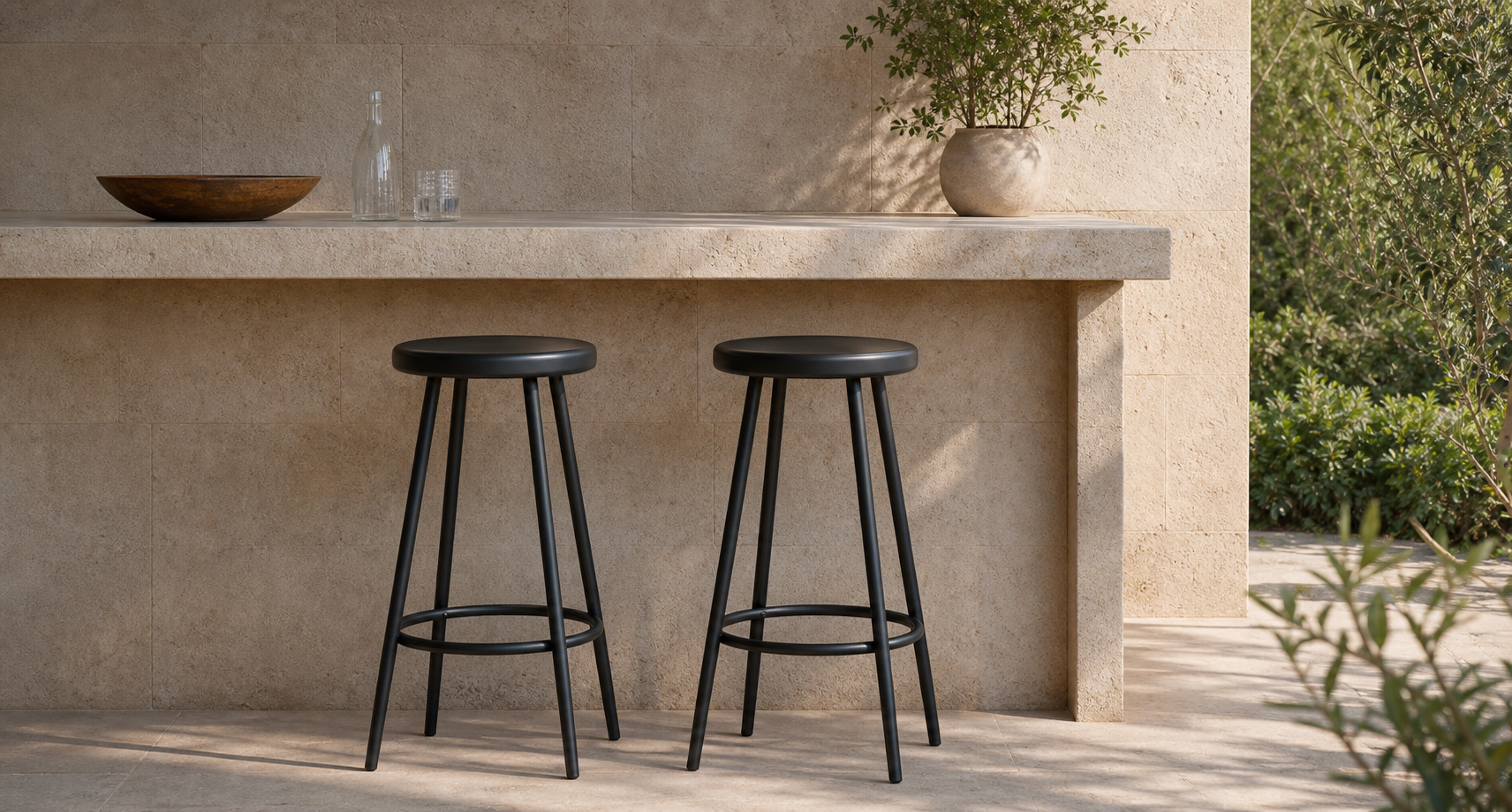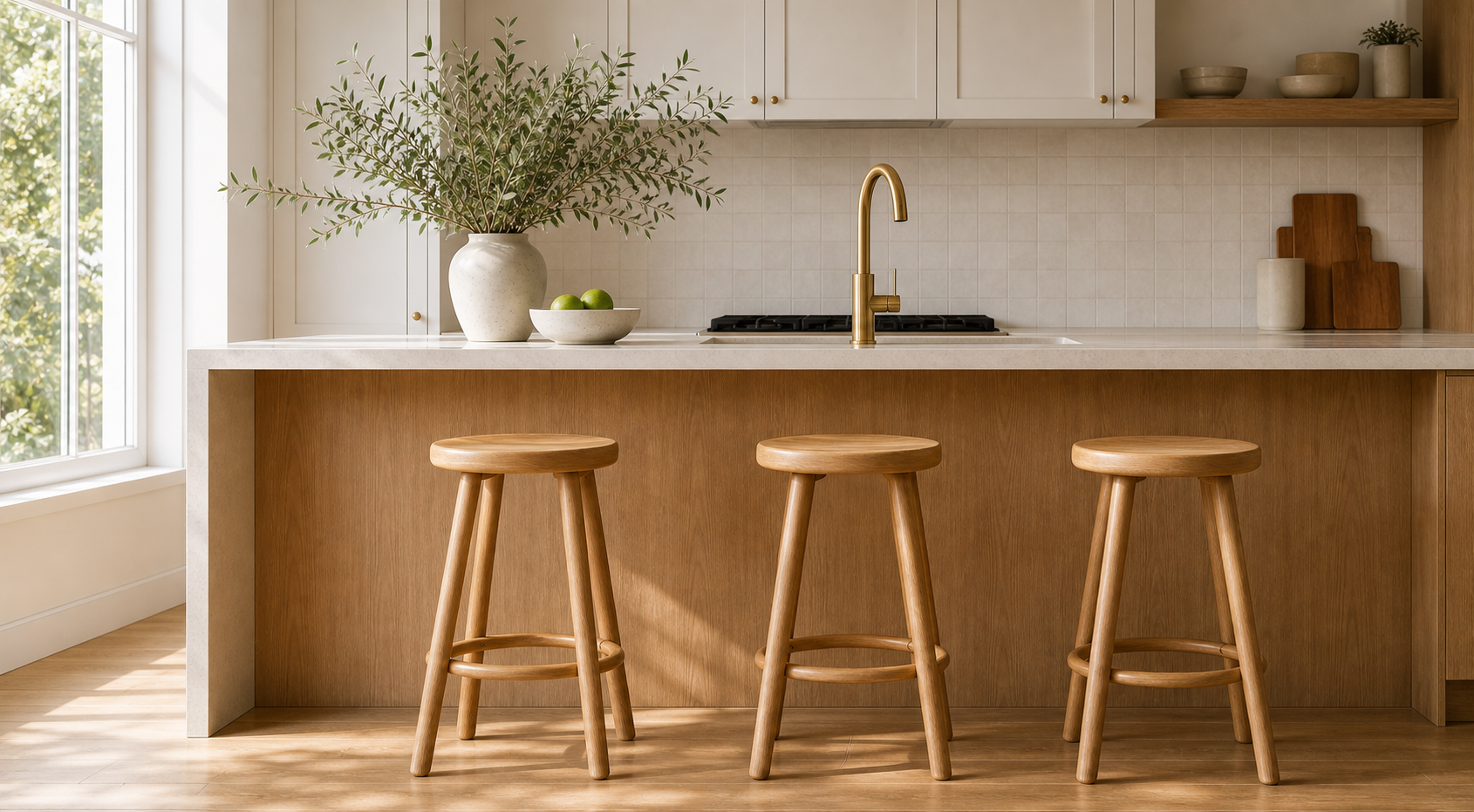
A stool that looks right in a photograph can feel wrong at your own counter. Start with the working dimensions, then choose the back, material and finish. A short measurement sheet makes different designs much easier to compare.

Measure the usable space
Measure from the floor to the counter surface and record the underside height as well. A thick top or apron can reduce knee room. As a starting point, allow roughly 10–12 inches between the seat and counter, then test the combination against the stool specifications and the way you sit.
Plan the whole row
Check seat width, overall width and how far the feet extend. Mark each footprint on the floor rather than dividing the island by the seat width alone. Leave space to pull out a stool and move behind it. Arms and swivel seats need additional room to turn without striking the counter.
Compare comfort before finish
A supportive footrest matters when your feet cannot reach the floor. Consider a back for longer meals and a backless profile when tucking seats away is the priority. Save the counter height, underside clearance and available length with your shortlist so that every style is compared on the same basis.
Explore stools and compare dimensions
Further reading: West Elm counter and bar stool guidance. Product-specific instructions take precedence.
Measure your counter
Measure from the finished floor to the top of the counter or bar. Most kitchen counters are around 35 to 36 inches high, while bar-height tables usually sit closer to 41 to 42 inches.
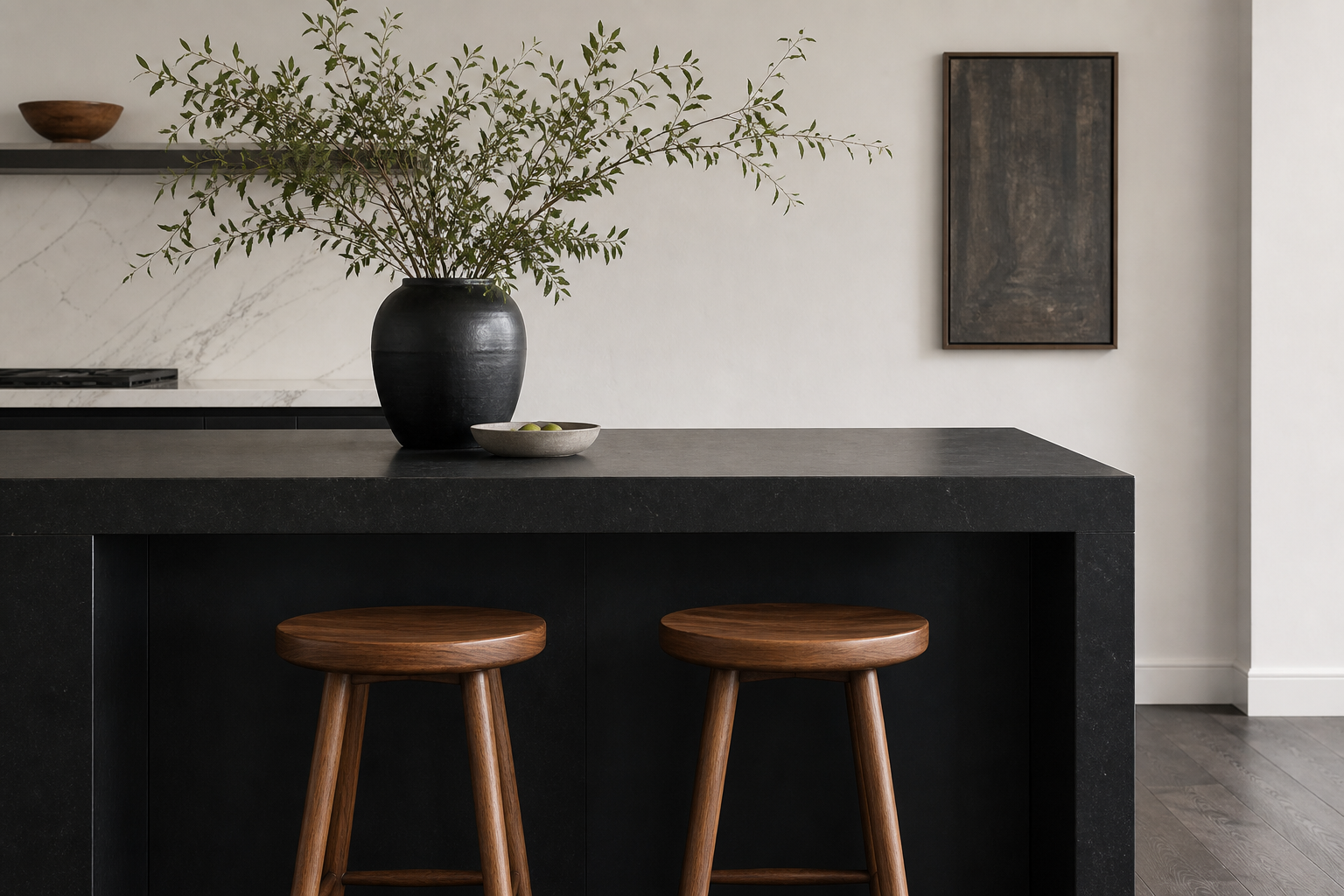
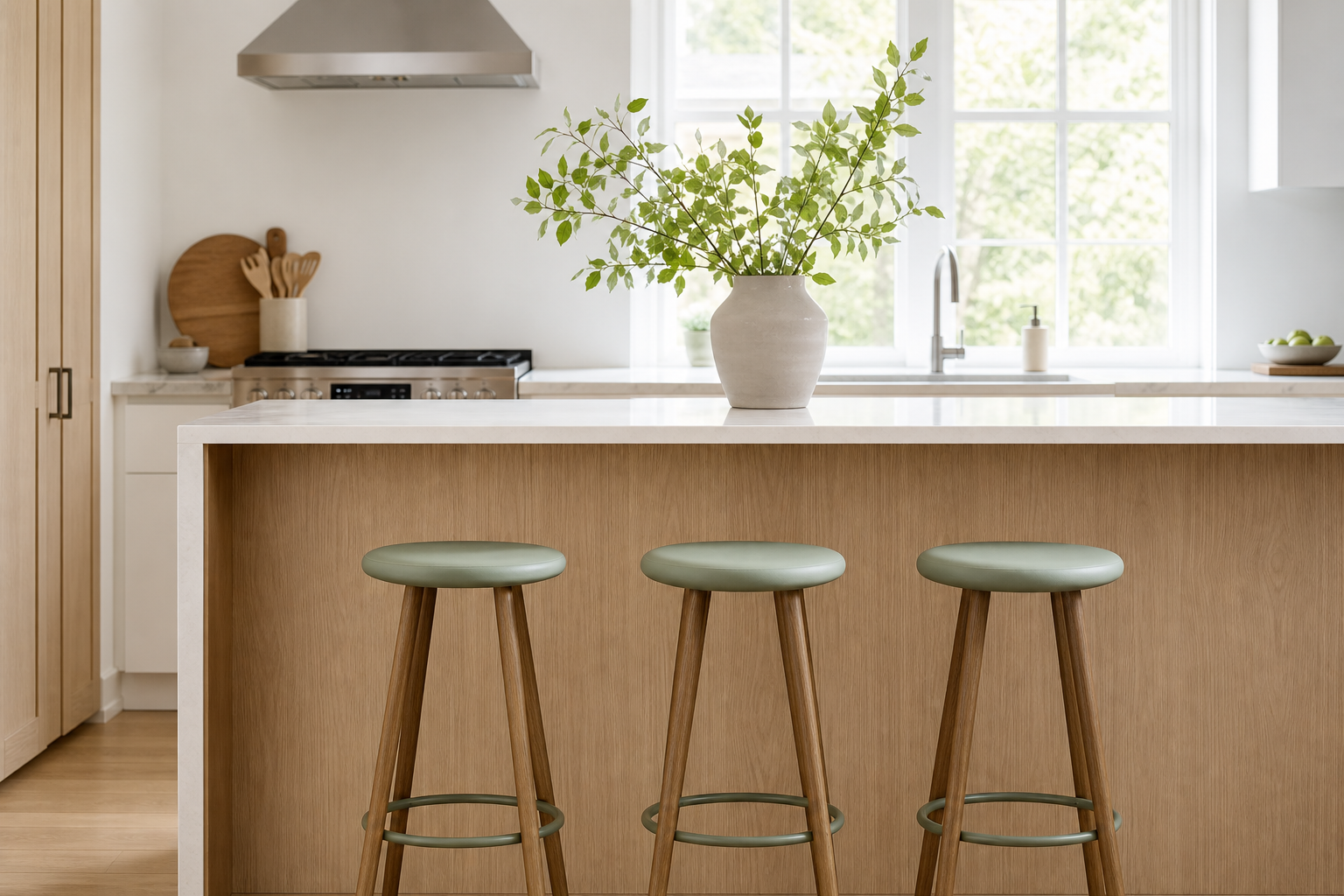
Seat height chart
For most comfortable seating, aim for 9 to 12 inches between the stool seat and the underside of the counter.
| Surface | Surface height | Recommended seat |
|---|---|---|
| Kitchen counter | 35-36 in | 24-26 in |
| Bar table | 41-42 in | 29-30 in |
| Dining table | 28-30 in | 17-19 in |
Leave room between stools
Crowded stools are hard to slide in and out. Plan for about 24 inches of counter width per stool, or a little more for swivel stools and designs with arms.
Choose the back style
Backless stools tuck away cleanly and work well in smaller rooms. Low-back stools add a little support without blocking the island.